
Why Men Have Grown Tired of Tinder and Conventional Dating Apps
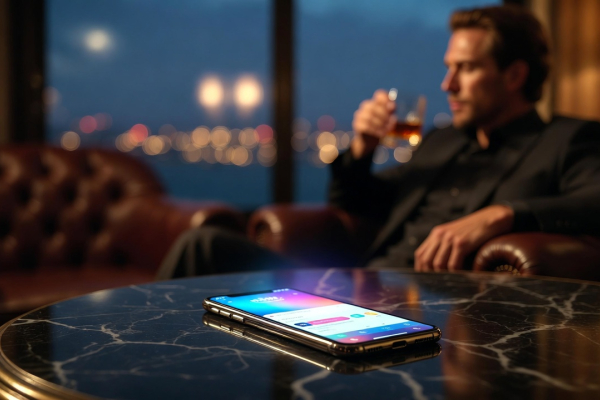
Why Men Have Grown Tired of Tinder and Conventional Dating Apps
Five years ago, the swipe felt like something close to genius. A few gestures of the thumb, a couple of witty exchanges, a glass of wine on a Friday evening, and suddenly the algorithms seemed to be outpacing loneliness itself. But by 2026, that narrative has begun to crack. Audibly.
Today, men speak about Tinder, Bumble, and the broader ecosystem of dating apps in roughly the same tone office professionals reserve for endless Zoom calls: functional in theory, draining in practice. Where these platforms once sold the seductive promise of infinite choice, a growing share of users now describe them as an attention marketplace, one in which every individual is simultaneously the product, the consumer, and their own personal brand manager.
It appears that romance has lost the race to the algorithm.
Swipe Culture Has Turned Dating Into an Endless Catalogue
The central grievance against conventional dating sites today is not fake profiles or hollow conversations. What exhausts men is the mechanics itself.
Swipe culture operates like TikTok applied to personal life: fast, dopamine-driven, and relentless. New faces load before genuine interest in the previous one has had time to form. The experience of modern dating increasingly resembles not a search for connection, but an endless open casting call.
Men over thirty feel this fatigue with particular acuity. At twenty-two, endless scrolling still reads as a game. At thirty-five, the calculus shifts entirely: time has become too valuable a resource to squander on dozens of identical exchanges revolving around “what do you do?” and “how was your day?”
In my view, this is where the defining rupture in dating app culture occurred. People stopped perceiving these platforms as spaces for genuine connection and began recognising them for what they truly are: fully operational attention economy machines.
Not relationships. Not flirtation. Not accidental chemistry.
Simply the competition for attention.
Men Are Experiencing Emotional Burnout
Professional burnout receives considerable attention. Dating burnout, by contrast, is rarely discussed. Yet the symptoms are strikingly similar.
The constant stream of new profiles creates the illusion of choice while simultaneously eroding any sense of meaningful connection. Men increasingly report that after several months on dating apps, a peculiar state sets in: the volume of interactions has grown, yet genuine interest in other people has quietly disappeared.
This is especially pronounced within the casual dating segment. Paradoxically, even casual dating has begun to feel like emotional routine. Too many identical scenarios, too many conversations leading nowhere, and far too little authentic curiosity from either side.
By 2026, a significant number of men have stopped searching for the “ideal woman” altogether. What they are looking for now is composure. Honest communication. The absence of a feeling that every message is passing through some invisible HR screening process.
This represents a genuinely new tendency within the relationships landscape of 2026.
After OnlyFans, People Became More Guarded About Intimacy
The rise of the creator economy has profoundly reshaped dating culture, though this connection is rarely made explicit.
Platforms like OnlyFans have definitively blurred the boundaries between personal brand, sexuality, attention monetisation, and genuine human connection. For a substantial number of men, this became a moment of deep disillusionment with mainstream online dating.
This is not a question of moral judgement. It is, rather, a fatigue born of the sensation of existing on permanent display. A condition in which every profile begins to resemble a composite of Instagram marketing, soft selling, and carefully curated personality construction.
The consequence has been a sharp rise in demand for privacy. For closed spaces. For the experience of communicating outside of a public performance, untethered from metrics and reach.
It is precisely this dynamic that explains why interest in private dating and exclusive meeting formats has surged so dramatically in 2026.
Telegram, Private Clubs, and the Rise of Quiet Introductions
A portion of men have simply exited the conventional app ecosystem. Quite literally.
An increasing share of meaningful connections today are formed through Telegram communities, private dating clubs, niche Discord servers, invitation-only events, and recommendation-based platforms. These spaces operate with fewer algorithms and considerably more human curation.
In place of endless swiping, different mechanics have taken hold:
- Introductions through trusted social circles
- Private communities with vetted membership
- Closed social events
- Intellectual clubs and salons
- Curated travel communities with shared interests
Against this backdrop, the segment of luxury matchmaking 2026 and elite introductions is expanding with notable momentum. And the conversation has long since moved beyond wealth alone.
The high-end companionship format once associated with affluent dating carried the caricatured aesthetics of a previous era: yachts, champagne, and relationships framed around a sugar aesthetic. The sensibility today is considerably more refined.
For many men, luxury dating now signifies, above all, the filtration of chaos. The ability to exist among people who share a similar rhythm of life, a comparable set of values, and an equivalent expectation of privacy.
And yes, admission to certain private dating clubs sometimes carries a price tag comparable to a premium MacBook.
Why Men Over Thirty No Longer Want the Dating Marketplace
By the time a man reaches his thirties, the underlying logic of relationships tends to shift fundamentally. The thrill of infinite choice diminishes. The desire to protect one’s psychological equilibrium takes precedence.
Men begin to regard their time, emotional energy, and attention as finite and precious resources. Conventional dating sites, as a result, are gradually losing ground to more intimate, curated formats.
The ethos of “engage with everyone” gives way to a different principle: one meaningful connection is worth more than a hundred empty exchanges.
This shift is clearly visible in the growth of niche elite dating app alternatives for 2026, where profiles undergo editorial moderation, membership numbers are deliberately limited, and emphasis has migrated from visual content toward personality and lifestyle compatibility.
Notably, offline communication is reclaiming its value in parallel. People have begun to appreciate encounters where a person can be experienced outside of their digital window-dressing. Without retouching, without a strategically constructed bio, without ten seconds allocated to making a decision.
Because the internet, it seems, has grown somewhat tired of itself.
What Lies Ahead for Dating Apps
In all likelihood, mass-market applications are not going anywhere. Tinder remains an enormous commercial ecosystem, and the appetite for fast, frictionless connections will always exist.
But the culture of dating itself is changing. And the pace of that change is accelerating.
In the years ahead, the market will in all probability split cleanly in two: hyper-mass platforms designed for quick interaction, and more expensive, invitation-only, curated services built for those who have exhausted their tolerance for digital noise.
If the defining metric of 2018 was the number of matches, then the defining currency of relationships in 2026 is something altogether different.
Silence.
Privacy.
And the experience of being chosen as a person, rather than scrolled past as another card in an infinite feed.
By Sophia, your guide to love and modern relationships. Exclusively for LuxeLive.Net
news
More news






No comments yet. Be the first!