
- Your country
-
- Alabama(1)
- Arizona(1)
- Atlanta(2)
- Austin(1)
- Boston(1)
- Byram(1)
- California(1)
- Chicago(2)
- Cokato(1)
- Colorado(1)
- Columbia(1)
- Dallas(2)
- Florida(1)
- Georgia(1)
- Harrisburg(1)
- Houston(1)
- Idaho(1)
- Illinois(1)
- Indiana(1)
- Iowa(1)
- Jefferson City(1)
- Kansas(1)
- Kentucky(1)
- Lansing(1)
- Las Vegas(1)
- Lincoln(1)
- Little Rock(1)
- Los Angeles(2)
- Louisiana(1)
- Lowa(1)
- Madison(1)
- Medfield(1)
- Miami(2)
- Michigan(1)
- Minnesota(1)
- Mississippi(1)
- Montana(1)
- Nashville(1)
- New Jersey(1)
- New York(2)
- North Carolina(1)
- Oklahoma City(1)
- Pennsylvania(1)
- Philadelphia(2)
- Phoenix(1)
- San francisco(1)
- Tallahassee(1)
- Tennessee(1)
- Texas(1)
- Vermont(1)
- Washington(1)
- Wyoming(1)
- Europa
-
- Amstetten(10)
- Ansfelden(1)
- Bad Schallerbach(2)
- Baden(6)
- Berg(2)
- Braunau am Inn(6)
- Bregenz(4)
- Bruck an der Mur(2)
- Bundesland Salzburg(1)
- Bundesland Steiermark(1)
- Bundesland Tirol(1)
- Burgenland(1)
- Carinthia(1)
- Graz(7)
- Hartberg(2)
- Innsbruck(6)
- Karnten(1)
- Kemmelbach(2)
- Kitzbühel(6)
- Klagenfurt(6)
- Klagenfurt am Wörthersee(1)
- Krems an der Donau(2)
- Kufstein(6)
- Leibnitz(2)
- Lienz(2)
- Liezen(2)
- Linz(6)
- Lower Austria(1)
- Niederosterreich(1)
- Oberosterreich(1)
- Oetz(2)
- Punitz(2)
- Radstadt(2)
- Salzburg(6)
- Schleswig-Holstein(1)
- St Polten(3)
- Steyr(2)
- Steyregg(2)
- Styria(1)
- Tirol(1)
- Traun(4)
- Upper Austria(1)
- Vienna(33)
- Villach(6)
- Völkermarkt(2)
- Vorarlberg(1)
- Wels(6)
- Wiener Neustadt(5)
-
- Aalst(4)
- Aarschot(5)
- Affligem(3)
- Anderlecht(8)
- Antwerp(18)
- Arlon(6)
- Ath(2)
- Aubange(5)
- Bastogne(2)
- Blankenberge(1)
- Bruges(6)
- Brussels(27)
- Charleroi(5)
- Deinze(3)
- Dendermonde(1)
- Diest(2)
- Etterbeek(5)
- Geel(1)
- Genk(5)
- Gent(10)
- Geraardsbergen(1)
- Grimbergen(2)
- Hasselt(4)
- Heusden- Zolder(2)
- Ieper(1)
- Izegem(1)
- Knokke(4)
- Kortrijk(3)
- La Louviere(2)
- Leuven(5)
- Liege(6)
- Lommel(1)
- Mortsel(1)
- Oostende(1)
- Turnhout(1)
-
- Agde(7)
- Agen(6)
- Aix les Bains(7)
- Ajaccio(8)
- Albi Le Sequestre(2)
- Bordeaux(6)
- Boulogne Billancourt(6)
- Caen(6)
- Cannes(18)
- Cherbourg-Octeville(3)
- Courchevel(8)
- Dijon(5)
- Fontainebleau(2)
- Lille(7)
- Lyon(16)
- Marseille(11)
- Montpellier(8)
- Nantes(6)
- Nice(16)
- Orléans(3)
- Paris(108)
- Rennes(10)
- Rouen(7)
- Saint Tropez(4)
- Strasbourg(10)
- Toulon(4)
- Toulouse(4)
- Troyes(1)
- Valence(4)
- Vannes(1)
-
- Berlin(62)
- Brandenburg(3)
- Bremen(2)
- Cologne(7)
- Dresden(3)
- Düsseldorf(11)
- Erfurt(2)
- Flensburg(3)
- Frankfurt(24)
- Hamburg(13)
- Ingolstadt(3)
- Kiel(2)
- Konstanz(3)
- Magdeburg(2)
- Mainz(3)
- Mannheim(4)
- Munich(39)
- Nuremberg(7)
- Potsdam(1)
- Rheinland-Pfalz(1)
- Rhineland-Palatinate(1)
- Saarbrücken(3)
- Saarland(1)
- Sachsen(1)
- Sachsen-Anhalt(1)
- Saxony(1)
- Schleswig-Holstein(1)
- schlobborn(1)
- Schwerin(1)
- Stuttgart(4)
- Thuringia(1)
- Triers(2)
- Waiblingen(2)
- Webling(1)
- Weinstrabe(1)
- Wiesbaden(1)
- Wismar(2)
- Worms(2)
- Würzburg(2)
-
- Abruzzo(3)
- Agrigento(1)
- Alessandria(1)
- Aosta(1)
- Arezzo(1)
- Asti(1)
- Avellino(1)
- Bari(3)
- Bergamo(4)
- Bologna(3)
- Bolzano(1)
- Brescia(1)
- Cagliari(1)
- Campobasso(1)
- Catania(3)
- Catanzaro(1)
- Como(2)
- Cosenza(2)
- Cremona(1)
- Emilia-Romagna(1)
- Ferrara(2)
- Florence(4)
- Genoa(1)
- L'Aquila(1)
- Lecco(1)
- Milan(34)
- Naples(5)
- Palermo(2)
- Parma(1)
- Pisa(1)
- Rimini(3)
- Rome(15)
- Salerno(1)
- Sardinia(1)
- Trieste(1)
- Turin(6)
- Venice(3)
- Verona(3)
- Vicenza(1)
-
- Biale Blota(2)
- Białystok(1)
- Bydgoszcz(1)
- Dobroszyce(1)
- Dziekanow Lesny(1)
- Gdańsk(2)
- Gorzów Wielkopolski(1)
- Hopowo(1)
- Kartuzy(1)
- Katowice(1)
- Kielce(1)
- Koscian(1)
- Krakow(10)
- Lublin(1)
- Łódź(2)
- Malomice(1)
- Mirkow(1)
- Olsztyn(1)
- Opole(1)
- Ostrowiec(1)
- Poznan(1)
- Pruszkow(1)
- Rymanowska(1)
- Rzeszow(1)
- Stare Pole(2)
- Szczecin(1)
- Warsaw(69)
- Wejherowo(1)
- Wroclaw(4)
- Zielona Góra(1)
- Zukowo(1)
-
- Abrantes(5)
- Acores(2)
- Albufeira(11)
- Alentejo(2)
- Algarve(2)
- Aveiro(3)
- Braga(3)
- Bragança(3)
- Castelo Branco(2)
- Centro(3)
- Coimbra(3)
- Distrito de Leiria(2)
- Distrito de Viana do Castelo(3)
- Distrito de Vila Real(4)
- Distrito do Porto(2)
- Évora(2)
- Faro(2)
- Funchal(4)
- Guarda(2)
- Lagos(4)
- Leiria(2)
- Lisboa e Vale do Tejo(3)
- Lisbon(72)
- Madeira(3)
- Montijo(3)
- Norte(2)
- Oeiras(4)
- Paivas(3)
- Portimao(3)
- Porto(14)
- Quarteira(3)
- Setubal(4)
- Viana do Castelo(3)
- Vilamoura(9)
-
- Alba(1)
- Alba Iulia(1)
- Arad(1)
- Arges(1)
- Bacau(1)
- Baia Mare(1)
- Bihor(1)
- Bistriţa(1)
- Bistrita-Nasaud(1)
- Botosani(1)
- Braila(1)
- Brasov(1)
- Bucharest(16)
- Buzau(1)
- Calarasi(1)
- Caras-Severin(1)
- Cluj(1)
- Cluj-Napoca(1)
- Constanta(3)
- Covasna(1)
- Craiova(1)
- Dambovita(1)
- Dolj(1)
- Drobeta-Turnu Severin(1)
- Focșani(1)
- Galati(1)
- Giurgiu(1)
- Gorj(1)
- Harghita(1)
- Hunedoara(1)
- Ialomita(1)
- Iasi(1)
- Ilfov(1)
- Mamaia(2)
- Maramures(1)
- Mehedinti(1)
- Miercurea-Ciuc(1)
- Mures(1)
- Neamt(1)
- Olt(1)
- Oradea(1)
- Piatra Neamţ(1)
- Piteşti(1)
- Ploieşti(1)
- Prahova(1)
- Râmnicu Vâlcea(1)
- Reşiţa(1)
-
- Abakan(1)
- Arhangelsk(1)
- Astrahan(1)
- Barnaul(1)
- Belgorod(1)
- Birobidzhan(1)
- Blagoveshchensk(1)
- Brjansk(1)
- Chelyabinsk(1)
- Dubna(5)
- Gelendzhik(2)
- Groznyy(1)
- Irkutsk(2)
- Ivanovo(1)
- Izhevsk(1)
- Kaliningrad(2)
- Kaluga(1)
- Kazan(5)
- Krasnodar(3)
- Krasnoyarsk(1)
- Maykop(1)
- Moscow(55)
- Nizhny Novgorod(4)
- Novosibirsk(1)
- Omsk(1)
- Penza(1)
- Rostov-on-Don(2)
- Saint Petersburg(13)
- Samara(1)
- Saratov(1)
- Serpukhov(2)
- Sevastopol(3)
- Sochi(5)
- Stavropol(1)
- Surgut(1)
- Tyumen(2)
- Ufa(4)
- Velikiy Novgorod(1)
- Vladikavkaz(1)
- Vladimir(1)
- Vladivostok(4)
- Volgograd(1)
- Vologda(1)
- Voronezh(1)
- Yekaterinburg(12)
- Yoshkar-Ola(1)
-
- A Coruna(5)
- Alacant(3)
- Alava(3)
- Albacete(3)
- Alicante(17)
- Almeria(3)
- Asturias(4)
- Avila(4)
- Badajoz(5)
- Balears(4)
- Barcelona(138)
- Benalmadena(4)
- Benidorm(10)
- Burgos(4)
- Caceres(4)
- Cadiz(3)
- Cantabria(4)
- Castello(4)
- Castellón de la Plana(4)
- Ceuta(3)
- Ciudad Real(3)
- Cordoba(3)
- Cuenca(4)
- Denia(4)
- Estepona(4)
- Fuengirola(7)
- Gasteiz / Vitoria(3)
- Girona(4)
- Granada(3)
- Guadalajara(4)
- Guipuzcoa(3)
- Huelva(4)
- Huesca(4)
- Ibiza(57)
- Jaen(4)
- Jerez de la Frontera(5)
- La Rioja(4)
- Lanzarote(4)
- Las Palmas(5)
- Las Palmas de Gran Canaria(8)
- Leon(4)
- Lleida(3)
- Logroño(3)
- Lugo(3)
- Madrid(83)
- Malaga(13)
- Marbella(57)
- Melilla(3)
- Murcia(5)
- Navarra(2)
- Oviedo(1)
- Palma de Mallorca(55)
- Pontevedra(1)
- Puerto Banus(3)
- Santa Cruz de Tenerife(1)
- Santiago de Compostela(1)
- Segovia(1)
- Seville(3)
- Tarragona(1)
- Tenerife(10)
- Toledo(1)
- Torrevieja(6)
- Valencia(11)
- Vigo(2)
- Vizcaya(2)
- Zaragoza(3)
-
- Alvsborgs Lan(2)
- Angermanland(1)
- Blekinge(1)
- Bohuslan(1)
- Dalarna(1)
- Falun(1)
- Gävle(1)
- Gavleborg(2)
- Gaza(1)
- Gothenburg(7)
- Gotland(2)
- Halland(2)
- Halmstad(1)
- Jamtland(2)
- Jonkoping(3)
- Kalmar(2)
- Karlskrona(1)
- Karlstad(1)
- Kristianstads(1)
- Kronoberg(2)
- Linköping(1)
- Luleå(1)
- Malmo(6)
- Norrbotten(1)
- Nyköping(2)
- Orebro(1)
- Ostergotland(1)
- Östersund(1)
- Saltsjo-Boo(1)
- Skane(1)
- Smaland(1)
- Sodermanland(1)
- Sollentuna(3)
- Solna(2)
- Stockholm(31)
- Umeå(1)
- Uppsala(1)
- Varmland(1)
- Västerås(1)
- Vasterbotten(1)
- Vastergotland(1)
- Vasternorrland(1)
- Vastmanland(1)
- Vastra Gotaland(1)
- Växjö(2)
- Worldwide
-
-
- Arad (3)
- Ashdod(9)
- Ashkelon(3)
- Bat Yam(14)
- Beer Sheva(2)
- Beit Hanania(2)
- Bet Shemesh(2)
- Caesarea(2)
- Dimona(2)
- Eilat(3)
- Gedera(2)
- Hadarom(2)
- Hadera(4)
- Haifa(6)
- Haifa District(2)
- Herzliya(23)
- Holon(2)
- Jaffa(10)
- Jerusalem(9)
- Karmiel(2)
- Kfar Sava(2)
- Kiryat Gat(2)
- Kiryat Malakhi(5)
- Kiryat Shmona(2)
- Kiryat Yam(2)
- Lod(2)
- Lower Galilee(1)
- Nahariya(2)
- Nazareth(1)
- Netanya(5)
- Ofaqim(2)
- Petach Tikva(5)
- Qalqilya(1)
- Raanana(2)
- Ramat Gan(3)
- Ramla(2)
- Rehovot(2)
- Rishon LeZion(10)
- Rosh Haayin(2)
- Savyon(8)
- Sderot(2)
- Tel Aviv(95)
- Tiberias(3)
- Tsafon(2)
-
- Alabama(1)
- Arizona(1)
- Atlanta(2)
- Austin(1)
- Boston(1)
- Byram(1)
- California(1)
- Chicago(2)
- Cokato(1)
- Colorado(1)
- Columbia(1)
- Dallas(2)
- Florida(1)
- Georgia(1)
- Harrisburg(1)
- Houston(1)
- Idaho(1)
- Illinois(1)
- Indiana(1)
- Iowa(1)
- Jefferson City(1)
- Kansas(1)
- Kentucky(1)
- Lansing(1)
- Las Vegas(1)
- Lincoln(1)
- Little Rock(1)
- Los Angeles(2)
- Louisiana(1)
- Lowa(1)
- Madison(1)
- Medfield(1)
- Miami(2)
- Michigan(1)
- Minnesota(1)
- Mississippi(1)
- Montana(1)
- Nashville(1)
- New Jersey(1)
- New York(2)
- North Carolina(1)
- Oklahoma City(1)
- Pennsylvania(1)
- Philadelphia(2)
- Phoenix(1)
- San francisco(1)
- Tallahassee(1)
- Tennessee(1)
- Texas(1)
- Vermont(1)
- Washington(1)
- Wyoming(1)
Why clubs have become a refuge again, not a showcase

Why Clubs Have Become a Refuge Again, Not a Showcase
Just ten years ago, a good party looked very predictable: a queue at the entrance, camera flashes, Stories every thirty seconds, and the feeling that half the people in the room came not to dance, but to confirm their own existence on the internet.
In 2026, everything has changed to almost the exact opposite.
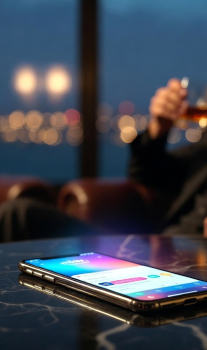
The best parties now often happen without announcements. Geolocation is sent a couple of hours before the start. Sometimes, phones are asked to be put into special pouches at the entrance. And the main sign of status has unexpectedly become not that you are seen, but that no one is filming you.
If you think about it, nightlife has once again become what it was originally meant to be: a refuge.
And this is quite ironic. The internet, which turned club culture into an endless showcase, has itself made its exclusivity the new luxury.
Clubs Stopped Being an Escape
The old nightlife had a very clear function. People went there to step out of their daytime lives for at least a few hours. Out of work, routine, control, and social roles.
The night city was always built around the idea of temporary disappearance.
Then social media appeared, and club culture gradually turned into an extension of it. The dance floor became a set for content. The bar - a background for photos. Even the music, at some point, began to work more as a part of the atmosphere for filming than as the core of the experience itself.
At some point, the party stopped being a space of freedom and turned into just another public stage.
And it seems this is exactly what exhausted people the most.
Because the internet in recent years has completely destroyed the feeling of invisibility. A person is constantly under someone else's gaze: a phone camera, stories, geotags, random videos, the endless documentation of any evening.
I have noticed a strange thing: many people today treat a good offline experience almost like a rare form of silence. Not acoustic, but social. The opportunity to stop being part of someone else's feed, at least for a while.
The New Luxury - Disappearing from the Internet
This is exactly why club culture is becoming closed again.
Not elitist in the caricatured sense of the early 2010s, where luxury was measured by table size and the number of bottles with fireworks. But genuinely closed.
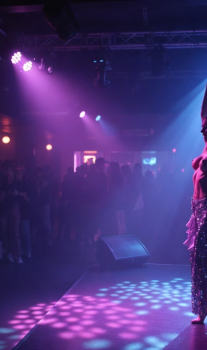
Small parties instead of huge clubs. Dim light instead of neon. A limited guest list instead of mass appeal. Spaces without cameras. Bars where filming is not welcome. Rooms with good sound and people who came to talk, not to document their own leisure.
And it is especially interesting that this shift is happening simultaneously with general digital fatigue. After the pandemic years, endless Zoom calls, and life inside screens, people began to perceive offline reality almost as a luxury experience.
Not because it became literally inaccessible. But because true presence has become a rarity.
The internet unexpectedly made physical reality a scarcity.
And against this background, a good club has once again begun to serve the function of a refuge. A space where you can temporarily disappear from the algorithmic environment.
The best table today is not the one everyone sees.
It is the one nobody films.
Why Mass Club Culture Stopped Working
The crisis of big clubs has another reason: they sold people the same experience for too long.
The same music. The same interiors. The same aesthetic of "accessible luxury". At some point, the nightlife of major cities began to look like a copy of itself.
And paradoxically, it was social media that accelerated this process. Algorithms quickly figured out what the "perfect night" should look like: dimmed lights, expensive cocktails, a beautiful silhouette in the mirror, a short video with the dance floor.
And the industry began to produce this visual template endlessly.
But any aesthetic built around mass repetition loses its sense of authenticity rather quickly. People do not get tired of luxury. People get tired of sameness.
Therefore, selective nightlife is now growing in almost all major cities. Not because the audience suddenly fell in love with snobbery, but because privacy once again creates a feeling of uniqueness.
If visibility used to be the status, now the status is the ability to choose your own degree of presence.
People Want Real Chemistry Again
There is another reason that the nightlife industry rarely talks about directly: people are tired of meeting through interfaces.
Dating apps promised the most convenient romance possible. In practice, they turned relationships into an endless catalog of faces, where any acquaintance feels like a small job interview.
Against this background, offline flirting has once again begun to seem almost like a luxury.
Not the aggressive club hunting of the 2000s, but a more cautious form of human contact. A conversation at the bar. A random glance. The slow feeling of chemistry that is impossible to fully reproduce in an app.
Moreover, the new generation treats this noticeably calmer and quieter than before. Less exhibitionism, less ostentatious sexuality, less desire to impress at any cost.
It seems that after digital oversaturation, people have once again started to appreciate things that cannot be accelerated by an algorithm.
A good conversation. The right atmosphere. A feeling of safety next to other people.
And this is also one of the reasons why private parties and closed spaces are becoming popular again. They do not sell luxury as status.
They sell a controlled environment where a person does not have to play a public version of themselves all the time.
A Generation Tired of Being Visible
The main mistake in conversations about modern club culture is perceiving it as a story about entertainment.
In reality, it is a story about exhaustion.
A generation that grew up inside constant digital visibility unexpectedly began to look for spaces where they could stop being content, at least for a while. Without cameras, without algorithms, without the feeling that any evening automatically becomes part of a public image.
This is exactly why nightlife is becoming intimate, expensive, and selective again. Not because the industry decided to bring back elitism. But because privacy is once again felt as a value.
Perhaps the ultimate luxury experience of 2026 looks nothing like what was imagined before.
Not the most expensive club in the city. Not a loud party. Not a table under camera flashes.
But a place where you can disappear for a few hours and finally feel that no one wants anything from you.
This is not the return of the old nightlife.
This is the return of the right to be invisible.
Author: Sophia, your guide to love and relationships. Exclusively for LuxeLive.Net







No comments yet. Be the first!