
Strip clubs after the internet: how dancers transformed from "part of the industry" into creator-entrepreneurs
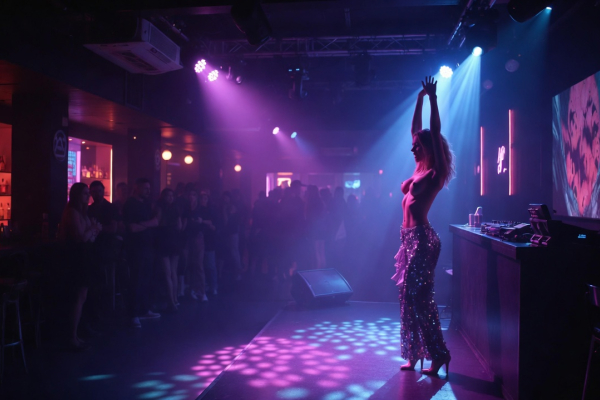
Strip Clubs After the Internet: How Dancers Evolved from "Part of the Industry" into Creator-Entrepreneurs
Just ten years ago, the image of a strip club in popular culture was surprisingly flat. Neon lights, other people's bachelor parties, a sense of slightly worn-out luxury, and women existing somewhere on the periphery of someone else's evening. The patrons were always considered the protagonists of these spaces. Dancers were perceived more as part of the nightlife scenery than as independent figures with their own economy, audience, and personal brand.
Today, things look different.
And it is not just that the adult nightlife industry itself has become more upscale, refined, and aestheticized. Something far more interesting is happening: the internet unexpectedly shifted the position of the women within this system. In essence, the creator economy gave them, for the first time, the chance to exist not as "part of the club," but as independent media units.
When you think about it, this is one of the most underrated cultural shifts of recent years.
Because conversations about the modern adult industry usually revolve around men, loneliness, subscriptions, and the monetization of attention. Yet the main turning point happened somewhere else entirely: women within this environment gained, for the first time, the ability to claim the audience for themselves.
From the Stage to a Personal Brand
The old nightlife format was built quite simply. The club owned the space, the flow of clients, the reputation, and the money. The women within the system remained part of the infrastructure. Even the most popular dancers were known only within the walls of a specific venue.
The internet broke all of that.
First came Instagram with its luxury nightlife aesthetic and a new culture of visual appeal. Then TikTok turned charisma into a standalone currency. Then Telegram, private subscriptions, and creator platforms finally blurred the line between nightlife, entertainment, and personal media.
Now a dancer no longer has to depend on a club as her only source of audience. The club becomes more of an offline venue for expanding her own brand.
This is clearly visible in how the presentation itself has changed. Adult nightlife used to sell the atmosphere of a venue. Now it increasingly sells a specific personality.
A woman develops her own audience, a private Telegram channel, subscriptions, private content, a recognizable visual style, and people who follow not so much the club as her personally.
This is exactly where the strip industry unexpectedly intersected with the logic of the creator economy.
The Internet Turned Attention into a Profession
There is a curious paradox in 2026.
The internet simultaneously made female appeal hypervisible and maximally commercialized. Social media long ago taught people to turn looks, charisma, voice, and lifestyle into a digital asset. But the creator economy went further: it monetized not only visuality, but also the sense of presence.
In my view, this is precisely why modern adult culture is perceived differently than it was ten or fifteen years ago.
Society used to see, above all, sexuality in such spaces. Now more and more people understand that this is also about emotional labor, attention, communication, and the constant management of one's own audience.
In a sense, dancers encountered ahead of time what the entire internet would later face.
Today, almost any creator sells not only content, but also a sense of access to themselves. This applies to influencers, streamers, lifestyle bloggers, and authors of private communities and Telegram subscriptions.
Adult creators simply ended up at the vanguard of this model.
And if the strip club used to be a separate industry, existing somewhere apart from mainstream digital culture, it has now unexpectedly embedded itself into the same attention economy in which everyone else lives.
Why Clubs Have Become Visually Different
Because of this, the spaces themselves have changed.
The old image of the strip club as a place of aggressive luxury is gradually giving way to a more sophisticated aesthetic. In major cities, boutique formats with lounge interiors, refined gastronomy, soft lighting, and an atmosphere of private nightlife are appearing more and more often.
What is interesting is that not only the interior changes, but also the logic of behavior inside.
The internet has slightly exhausted people with constant ostentation. Paradoxically, the era of Stories and the endless recording of everything has once again made privacy a luxury.
The best evening is no longer the one you can show to everyone.
It is the one that stays inside the room.
This is precisely why premium adult nightlife increasingly values not provocation, but control of the atmosphere. Safety. Selectivity of the crowd. The absence of chaos. The ability to spend a few hours in a space that is not trying around the clock to compete for a person's attention.
This, by the way, also changes the attitude toward the dancers themselves.
If popular culture once portrayed them almost as caricatures, it now increasingly talks about women who simultaneously work within nightlife, run their own media, build a personal brand, manage subscriptions, and literally turn their own recognizability into a business model.
And here something rather unexpected arises.
A New Power Within Nightlife
The creator economy has shifted the balance of power in almost every digital industry. Musicians have become less dependent on labels. Journalists are moving to independent media. Independent models work directly with their audience.
Roughly the same thing is happening with nightlife.
The club used to control access to the audience. Now the audience often comes already for a specific person.
In this sense, modern adult creators are becoming closer to entrepreneurs than to the old image of the "club girl" that existed in pop culture for decades.
They develop their own audience funnel, a steady base of subscribers, a digital presence, and the ability to distribute their attention across several platforms at once.
Telegram especially accelerated this process.
It is no coincidence that many creators are gradually shifting their communication there. Instagram is increasingly dependent on algorithms and publicity. Telegram, on the contrary, creates a sense of a closed space with direct contact between the author and the audience.
And in 2026, privacy itself has become a new form of status.
Especially in industries connected to emotional attention.
Why There Is So Much Debate Around This
Of course, this is where the most complex part of the conversation begins.
Because the creator economy simultaneously gave many women more independence and turned human attention into an almost entirely commercial resource.
Critics of this model say the internet has finally erased the line between relationships, entertainment, and business. Supporters reply that this line was always rather conditional anyway — it is just that platforms used to take most of the control for themselves.
It seems the main cultural conflict here is not about adult entertainment at all.
It is about how far the internet is willing to go in turning a personality into an economic model.
Because today it is no longer just content that is being sold.
Access is being sold.
Time.
Attention.
Replies to messages.
The sense of a private space.
And adult nightlife turned out to be one of the first industries where this became especially clearly visible.
What Comes Next
Most likely, the very line between nightlife, the creator economy, and luxury hospitality will continue to blur.
Private communities will become even more sought-after. Telegram subscriptions will continue to displace public platforms. And adult creators will increasingly be perceived not as part of a shadow industry, but as independent digital entrepreneurs with their own audience and media weight.
But something else matters more.
The internet long promised people total freedom of visibility. The ability to be available always and to everyone.
And then it suddenly turned out that the most expensive thing, once again, became the limitation of access.
And perhaps this is precisely why the new adult culture looks less and less like the old entertainment industry.
And more and more like an economy of private attention.
Author: Sophia, your guide to love and relationships. Exclusively for LuxeLive.Net
news
More news







No comments yet. Be the first!